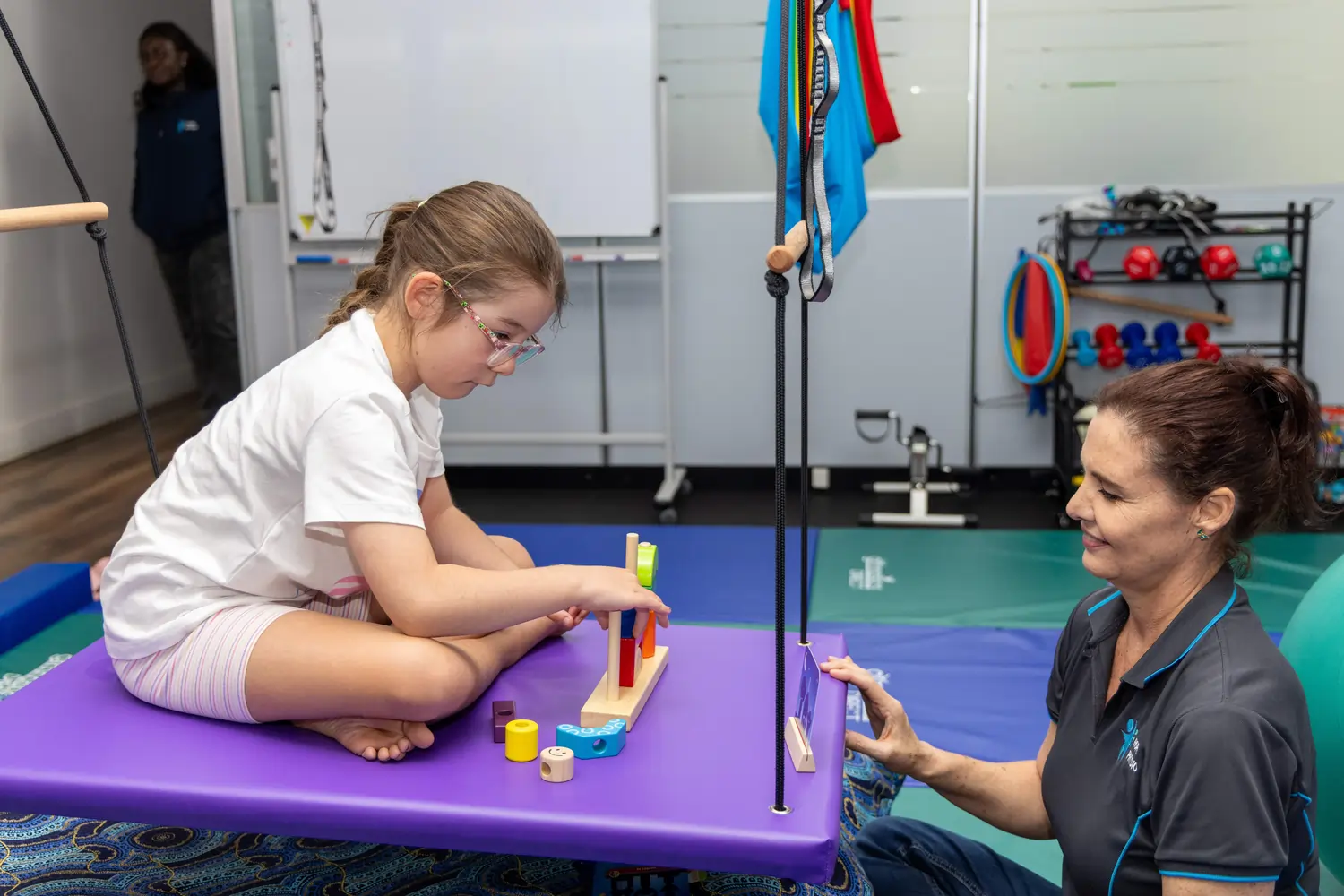

At Hope Physio, we often see participants who are already receiving Occupational Therapy begin to ask questions about communication, feeding, or social interaction. And it makes complete sense, because the way we move through the world and the way we communicate are deeply connected.
If you’re a family, carer, or Support Coordinator exploring allied health options, this article explains why combining Speech Pathology with Occupational Therapy frequently leads to faster, more meaningful progress and how it works in practice at our clinic.
What Each Discipline Does
Occupational Therapy (OT) focuses on helping individuals participate in the everyday activities that matter most to them: getting dressed, attending school, managing sensory input, writing, cooking, or engaging socially. At Hope Physio, our OT team works across paediatric, neurological, mental health, geriatric, and community settings, supporting participants across the full lifespan.
Speech Pathology addresses communication, language, literacy, social skills, voice, fluency, and feeding. A Speech Pathologist helps participants find their voice, whether that means learning to form words, improving how they process and respond to language, or developing the confidence to communicate in a variety of settings.
Where the Two Disciplines Overlap
Here is where it gets interesting. Many of the skills and goals targeted in OT and Speech Pathology are not parallel. They are intertwined.
Consider a child with autism spectrum disorder. Their OT might be working on sensory regulation and fine motor skills so they can sit, attend, and participate in classroom activities. Their Speech Pathologist is simultaneously working on receptive language, which is the ability to follow instructions and understand what’s being said around them.
These two goals are not separate. A child who is dysregulated or overwhelmed by sensory input cannot process language effectively. And a child who cannot follow verbal instructions will struggle to engage with OT activities that rely on comprehension. Progress in one directly supports progress in the other.
This is why collaboration between disciplines is not a luxury. It is often the most efficient pathway to meaningful outcomes.
Common Scenarios Where Both Services Work Together
1. Children with Developmental Delays Children who present with delays in motor skills, self-care, and play frequently also experience delays in expressive and receptive language. When OT and Speech Pathology are delivered in a coordinated way, with shared goals and regular communication between clinicians, families often see improvements that would take significantly longer to achieve through one service alone.
2. Participants with Acquired Brain Injury or Stroke Recovery following a neurological event is rarely straightforward. An OT supports a participant in regaining independence in daily tasks such as bathing, meal preparation, and returning to work. A Speech Pathologist addresses the aphasia, cognitive-communication difficulties, or swallowing changes that frequently accompany these injuries. Combined, the two services address both what a person does and how they connect with the people around them.
3. Older Adults Receiving Home Care Packages For older participants managing cognitive decline or age-related changes, OT provides practical strategies to maintain independence and safety at home. Speech Pathology supports safe swallowing, communication with family and care staff, and cognitive strategies for daily life. Together, they contribute to a participant remaining in their home for longer, which is often the primary goal of both the participant and their family.
4. Participants with Mental Health Challenges Social communication difficulties are a common but underrecognised feature of many mental health presentations. A participant working with an OT on vocational rehabilitation, routine-building, and community participation may also benefit from Speech Pathology to support confidence in workplace communication, job interviews, or group settings.
How It Works at Hope Physio
Our clinic is designed to support this kind of integrated care. Our OT team and Speech Pathologist communicate regularly, share relevant participant goals, and where appropriate, coordinate their approaches to ensure sessions build on each other rather than working in isolation.
When you access both services through Hope Physio, you are not managing two separate provider relationships. You have one team, one location, and a shared commitment to your goals.
For NDIS participants, both Occupational Therapy and Speech Pathology are eligible supports under the Capacity Building budget. A Support Coordinator or Plan Manager can assist with setting up a service agreement that includes both disciplines.
Signs It May Be Worth Exploring Speech Pathology
If your loved one is already receiving OT at Hope Physio, it may be worth discussing Speech Pathology if you have noticed any of the following:
- Difficulty following instructions or understanding what is said to them
- Limited expressive language, using fewer words than expected for their age
- Challenges with social communication such as taking turns in conversation or reading social cues
- Frustration when trying to communicate, or withdrawing from social situations
- Difficulty with reading and writing that goes beyond what OT is addressing
- Concerns about safe swallowing or eating
These are starting points for a conversation, not a diagnostic checklist. Our team is happy to discuss whether Speech Pathology might complement your current plan.
Getting Started
If you are an existing OT participant at Hope Physio and would like to explore Speech Pathology, the simplest next step is to mention it at your next session. Your OT can provide a warm referral directly to our Speech Pathologist and help coordinate the conversation.
If you are a new participant or a referring professional, including Support Coordinators, GPs, and paediatricians, you are welcome to contact us directly to discuss whether a combined OT and Speech Pathology plan would be appropriate.
📍 Hope Physio — Shop 3/36 Synnot St, Werribee VIC 3030
📞 0410 462 270
🌐 hopephysio.com.au
We proudly support NDIS participants across Melbourne, Geelong, Melton, Bacchus Marsh, and Caroline Springs.