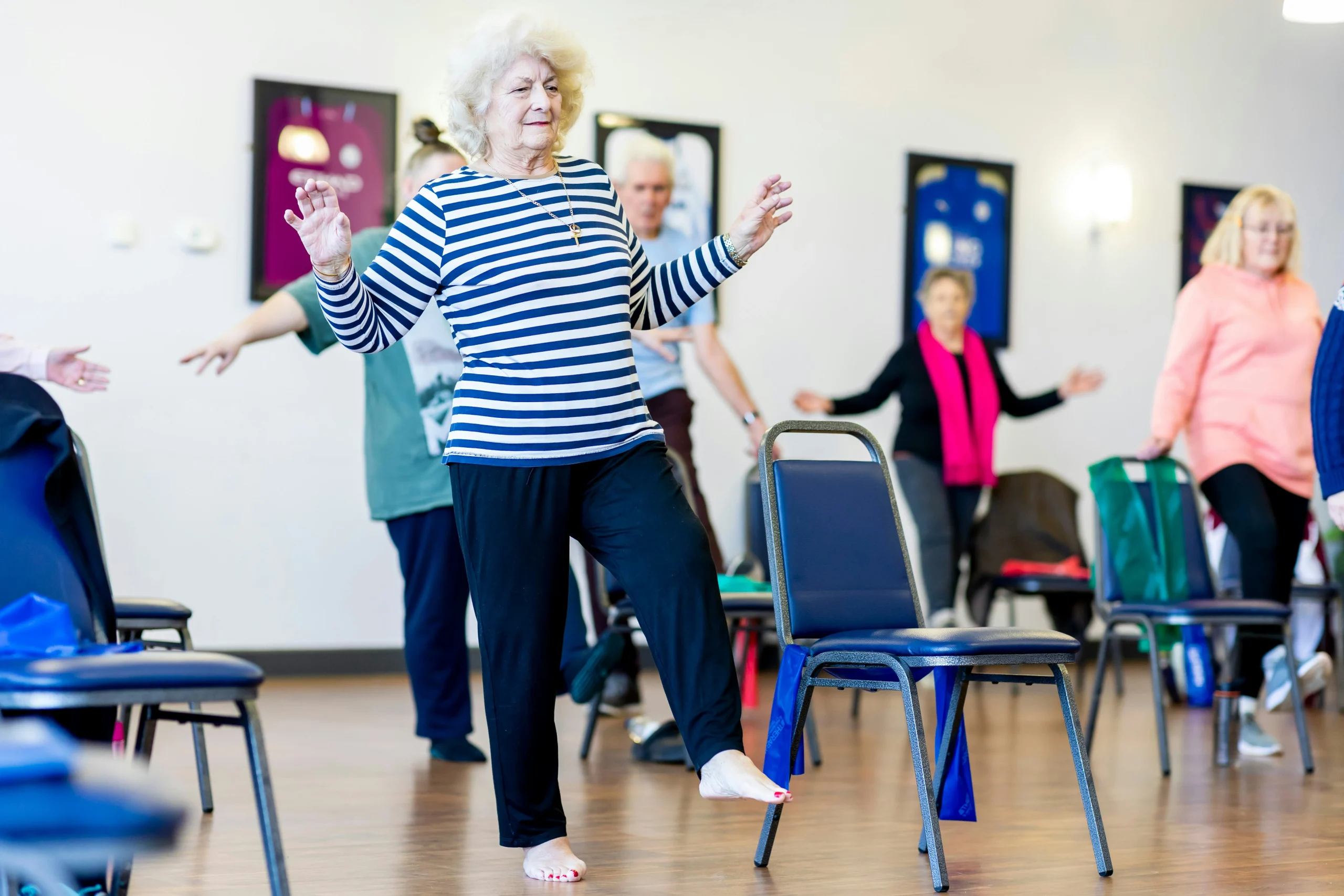
Watching our older parents grow old can be bittersweet. Their strength is not what it used to be. We worry about a fall when doing something as ordinary as getting out of bed or crossing the kitchen. The reassuring part is that balance exercises to prevent falls, practised a few times a week, can genuinely lower that risk. Regular exercise cuts fall risk by roughly 23 percent, much of it from simple movements anyone can do at home. This guide covers balance and strength exercises for older adults, how often to practise them, and when it is worth booking a physiotherapist.
Why Do Older Adults Fall More Often?
Falls become more common with age because leg strength, balance reflexes and reaction time naturally decline over time. In Australia, one in three people over 65 has at least one fall every year, and roughly half of these happen at home.
Common contributors include:
- Weaker legs, hips and ankles
- Slower balance reactions
- Poor lighting or clutter underfoot
- Medication side effects
- Vision changes affecting depth and steps
Most of these risks respond well to targeted exercise, which is why physiotherapists build balance and strength work into almost every falls prevention plan.
What Are the Best Balance Exercises to Prevent Falls?
The best balance exercises challenge stability in a safe, controlled way, always near a sturdy chair or bench for support.
- Single-leg stance. Hold a chair, lift one foot slightly off the floor and balance for 10 to 15 seconds. Repeat three times per leg.
- Heel-to-toe walk. Walk in a straight line, placing the heel of one foot directly in front of the toes of the other. Do 10 steps.
- Sit-to-stand. Rise from a chair without using the hands, then sit back down slowly. Repeat 8 to 10 times.
- Weight shifts. Feet hip-width apart, shift weight slowly from one foot to the other. Repeat 10 times.
Each move builds the small stabilising muscles the body relies on when it unexpectedly loses balance.
What Strength Exercises Help Prevent Falls?
Strength training matters just as much as balance work, because weak legs are one of the biggest predictors of a fall.
- Chair squats. Lower slowly toward a chair seat without fully sitting, then stand back up. 8 to 10 reps.
- Calf raises. Holding a chair for support, rise onto the toes and lower slowly. 10 to 15 reps.
- Wall push-ups. Stand an arm’s length from a wall and perform slow push-ups for upper body and core strength.
- Step-ups. Step onto a low, stable step and back down, alternating legs. 8 reps per side.
How Often Should Older Adults Do These Exercises?
Consistency matters more than intensity. The table below outlines a realistic weekly starting point.
| Exercise Type | Frequency | Examples |
| Balance | 3 or more times a week | Single-leg stance, heel-to-toe walk |
| Strength | 2 to 3 times a week | Chair squats, calf raises, step-ups |
| Walking | Most days of the week | 20 to 30 minute brisk walk |
The Otago Exercise Programme, a well-researched strength and balance routine for older adults, has been shown to cut falls by 23 to 40 percent when practised regularly.
Common Mistakes to Avoid
- Skipping a warm-up before balance work
- No chair, wall or rail nearby for support
- Adding repetitions too quickly instead of building gradually
- Holding the breath during strength exercises
- Continuing through pain or dizziness instead of stopping
Practical Tips to Make Home Exercise Safer
- Wear supportive, flat, non-slip shoes, not socks or slippers
- Clear the space of rugs, cords and clutter
- Exercise at the same time each day to build routine
- Keep a phone nearby in case of a fall
- Ask a family member to join the first few sessions
When Should You See a Physiotherapist About Falls?
See a physiotherapist if a fall has already happened, balance feels noticeably worse than a year ago, or standing up from a chair has become difficult. An assessment identifies specific strength or balance gaps and builds a programme suited to the individual. Visit Hope Physio’s physiotherapy services to learn how an assessment works.
Helping an older parent stay steady on their feet does not require a gym membership or complicated equipment. A few balance exercises to prevent falls, practised consistently, can genuinely reduce the risk of a serious injury and help them keep their independence. If you would like a physiotherapist to assess your parent’s balance and strength and build a personalised plan, submit an intake form with Hope Physio and our team will be in touch to arrange next steps.