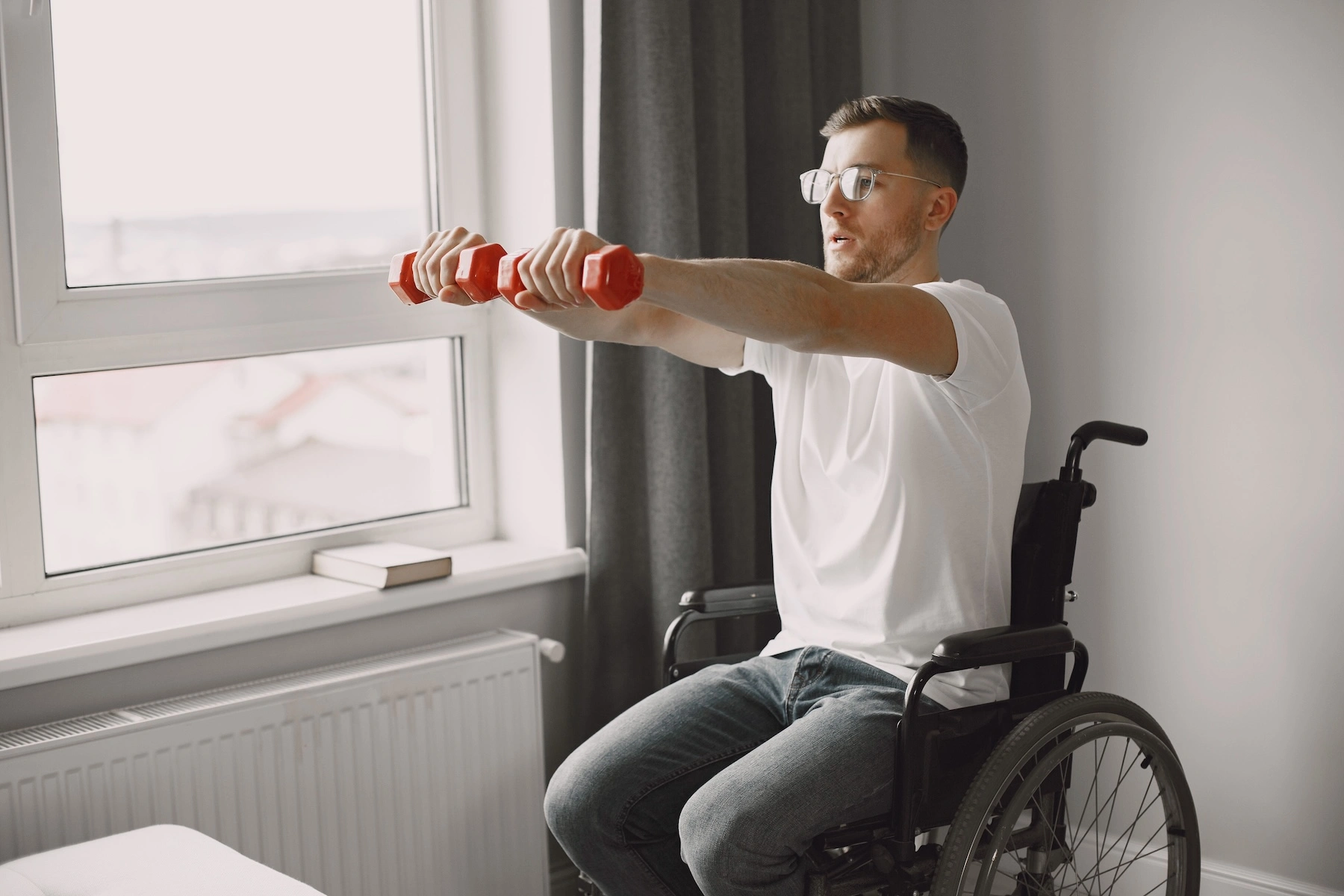
Coming home from hospital feels like the finish line. In reality, it is closer to the starting line. The ward had rails, flat floors and a nurse on call. Your house has steps, a slippery bathroom and a couch that is suddenly very hard to get out of.
Physiotherapy after hospital discharge exists to close that gap. It is structured, hands-on rehabilitation that rebuilds your strength, balance and confidence in the place you actually live. For many people in Melbourne, that means a physiotherapist coming to the house rather than the other way around.
This guide explains what home-based physio involves, how quickly you should start, who pays for it, and the mistakes that send people back to hospital.
What is physiotherapy after hospital discharge?
Physiotherapy after hospital discharge is short-term rehabilitation that helps you regain the movement, strength and independence you lost while you were unwell. It usually starts within days of you getting home and runs for a few weeks to a few months, depending on why you were admitted.
A physiotherapist assesses how you move, works out what is holding you back, then builds a program to get you back to your normal routine. Treatment commonly includes:
- Strength work for the muscles that weakened during your stay
- Balance and gait retraining to reduce your risk of falling
- Walking practice, including stairs, kerbs and uneven ground
- Manual therapy to ease pain and stiffness in joints and soft tissue
- Breathing and endurance work if your chest or fitness took a hit
- Equipment advice, such as whether you still need a frame or stick
- Education for you and your family on what is safe to do and when
The aim is not just to get you walking. It is to get you showering, cooking, driving and sleeping normally again.
Why the first few weeks at home matter most
Muscle disappears far faster than most people expect. In a well-known study of healthy older adults, just 10 days of bed rest produced a 0.95 kg loss of lean leg mass, a 13.2 per cent drop in knee extensor strength and a 14 per cent fall in stair-climbing power. These were fit, healthy volunteers who were not sick at all.
If you spent a week in hospital with an infection, a fracture or after surgery, the losses are usually steeper. Clinicians call this deconditioning, and it is the reason a person can go into hospital walking independently and come out unable to get off a low chair.
The falls data tells the same story. Australian research summarised in a systematic review found roughly 40 per cent of older adults fall within six months of leaving hospital, and around 58 per cent within twelve months. Falls in that window frequently lead straight back to an emergency department.
Here is the encouraging part. Strength responds quickly when you load it properly. The people who start structured rehabilitation early tend to recover function faster and hold onto it. Waiting three weeks to “see how you go” usually means starting from a lower base.
Quick answer: Most people should begin physiotherapy within one to two weeks of discharge, and sooner after joint replacement, stroke or a fall-related fracture. Check your discharge summary, since it often states a recommended timeframe.
What happens in a home physiotherapy session
A home visit follows a clear structure. Nothing about it is mysterious, and you do not need to prepare anything beyond clearing a bit of floor space.
The first visit: assessment
Your physiotherapist will read your discharge summary, ask about your admission, medications, pain levels and what you could do before you got sick. Then they watch you move. Getting out of a chair, walking a short distance, turning, stepping up, reaching overhead. They will also look at your home itself: the bathroom, the bedroom, the front steps, the rugs.
By the end of that visit you should have two or three specific goals written down. Good goals sound like “walk to the letterbox and back without the frame by week four”, not “get stronger”.
Ongoing sessions
Follow-up visits usually run 45 to 60 minutes, once or twice a week at first. Each session mixes hands-on treatment with progressive exercise, and your physiotherapist adjusts the load as you improve. Sessions taper as you become more independent.
Your home exercise program
This is where most of the progress actually happens. You will be given a short daily program, generally 10 to 20 minutes, built from movements you can safely do alone. Sit to stands, heel raises, step-ups, sideways walking along a bench. Your physio should demonstrate each one, watch you do it, and leave written or video instructions behind.
Home visits or clinic sessions: which suits you?
Both work. The right choice depends on where you are in your recovery.
| Home physiotherapy | Clinic physiotherapy | |
| Best for | The first weeks after discharge, poor mobility, no transport, high falls risk | Later recovery, return to work or sport, gym-based strengthening |
| Main advantage | Rehab happens in your real environment, using your actual stairs and bathroom | Access to equipment, weights, plinths and hydrotherapy |
| Family involvement | Easy, carers can join the session | Possible but less practical |
| Travel required | None | Yes, plus parking and fatigue |
| Typical cost | Higher per session, includes travel | Lower per session |
| Home safety review | Included naturally | Needs a separate visit |
Many people start at home and move to the clinic once they can travel comfortably. That progression is a sign of recovery, not a downgrade.
Who pays for physiotherapy after hospital discharge in Australia?
This trips up almost everyone. There are several funding paths, and the one that applies depends on your age, your circumstances and how you were injured.
| Funding option | Who it suits | What to know |
| Medicare chronic condition management plan | People with an ongoing condition lasting six months or more | Your GP can refer you for up to five allied health services per calendar year, shared across all disciplines. Referral rules changed on 1 July 2025, so ask your GP for a current referral. A gap payment usually applies. |
| Private health insurance | Anyone with extras cover | Rebates vary by fund and level of cover. Home visits are not always covered, so ring your fund first. |
| Support at Home (Restorative Care Pathway) | Older Australians assessed through My Aged Care | Replaced Home Care Packages and Short-Term Restorative Care from 1 November 2025. The Restorative Care Pathway funds up to 12 weeks of intensive allied health, extendable to 16 weeks, with clinical care fully government funded. |
| Transition Care Program | People aged 65 and over (50 and over for Aboriginal and Torres Strait Islander people) leaving hospital | Up to 12 weeks of therapy at home or in a facility. You must be assessed by ACAT or ACAS while still in hospital, so raise it before you are discharged. |
| NDIS | Participants under 65 with a permanent disability | Physiotherapy is funded under capacity building supports. Home delivery is common. |
| TAC or WorkCover | Transport accident or workplace injury | Treatment is generally funded once your claim is accepted. Your claim number is the key. |
| Private payment | Everyone else | No referral needed. You can book directly and start immediately. |
You do not need a GP referral to see a physiotherapist in Australia. A referral is only required if you want a Medicare rebate or if a scheme requires one.
Practical tips for your first fortnight home
- Read your discharge summary properly. It lists your restrictions, wound care, medications and follow-up appointments. Bring it to your first physio session.
- Book rehab before you leave hospital. Ask the ward physiotherapist or discharge planner to help arrange it. Waiting until you are home wastes a week.
- Move little and often. Short, frequent walks around the house beat one long effort that leaves you wiped out.
- Sort the obvious hazards on day one. Loose rugs, trailing cords, poor lighting in hallways, a bath mat with no grip.
- Keep a simple diary. Note pain scores, how far you walked, how many times you did your exercises. Patterns become obvious quickly.
- Eat enough protein. Rebuilding muscle needs fuel. Speak to your GP or a dietitian if your appetite dropped in hospital.
- Bring a family member into a session. Carers who understand the plan give far better support.
- Set an alarm for your exercises. Habit beats motivation, especially when you are tired.
Common mistakes that slow recovery
- Resting until you feel ready. Strength does not return with rest alone. It returns with graded loading.
- Doing too much on a good day. The classic boom and bust cycle leads to three bad days for every big one.
- Stopping the moment you feel normal. Function often returns before strength does, and that gap is where people fall.
- Ignoring new pain. Post-surgical soreness is expected. Sudden swelling, redness, fever or shortness of breath is not. Contact your GP or hospital team.
- Keeping the walking frame out of habit. Using more support than you need slows progress. Your physiotherapist will tell you when to step down.
- Assuming physio is only for surgery patients. People discharged after pneumonia, cardiac events, cancer treatment or a long medical admission benefit just as much.
- Not asking about funding. Plenty of people pay privately when they were eligible for a funded program the whole time.
Frequently asked questions
How soon after discharge should I start physiotherapy? Most people should start within one to two weeks. After joint replacement, stroke or a fracture, your surgeon or hospital team will usually want rehabilitation underway within days.
Can a physiotherapist come to my home in Melbourne? Yes. Hope Physio provides home visits across Melbourne for people recovering after a hospital stay, which is often the most practical option in the early weeks when travel is difficult.
Do I need a GP referral? Not to see a physiotherapist. You do need one for a Medicare rebate under a chronic condition management plan, and some schemes require documentation.
How many sessions will I need? It varies with your diagnosis and starting point. Uncomplicated post-surgical recovery may take four to six sessions. Recovery after a stroke or a long admission can run for several months. Your physiotherapist should give you an estimate after the first assessment.
What should I wear and prepare? Loose, comfortable clothing and supportive shoes. Clear a two-metre space, have your discharge summary and medication list handy, and keep any equipment such as a frame or stick nearby.
Is home physiotherapy as effective as going to a clinic? For early post-hospital recovery, yes, and often better. Practising on your own stairs and in your own bathroom transfers directly to daily life. Clinic sessions become more useful later when you need equipment.
What if I have a fall at home? Do not push through it. Contact your GP, and tell your physiotherapist at the next session. A fall almost always means the program or your equipment needs adjusting.
Getting your recovery moving
Recovering at home is not something you should have to work out alone with a photocopied exercise sheet. Physiotherapy after hospital discharge gives you a plan, a professional watching your progress, and someone to call when something does not feel right.
Hope Physio’s team supports people across Melbourne through post-hospital recovery, whether that is after surgery, a fall, a stroke or a long medical admission. We work in your home when travel is hard, and in our Werribee clinic when you are ready for more. You can read more about our approach on our physiotherapy page.
Ready to start? Book an appointment with Hope Physio and let us build a recovery plan that fits your home, your goals and your timeline.