Most children like knowing what happens next. For a child with autism, that need often runs deeper. A change to routine, big or small, can turn an ordinary afternoon into a genuinely difficult one.
If you are raising a child with autism, you have probably seen it: the tears when a favourite mug is in the dishwasher, the resistance to a new teacher, or the meltdown when the usual road home is blocked. These reactions are not bad behaviour. They are a response to a world that has suddenly stopped making sense.
The good news is that helping your child cope with change is a skill that can be built, one small step at a time. This article looks at why routines and transitions matter so much to children with autism, and sets out practical, evidence-based strategies for both changes you can see coming and the surprises you cannot. We also cover when it may be worth bringing in extra support, such as occupational therapy for autism.
Why Change Can Feel So Hard for a Child With Autism
Children with autism often rely on routines because predictability helps them make sense of the world and manage sensory and emotional load. When a routine breaks, that structure disappears, and the result can be anxiety, shutdown or a meltdown.
Researchers call this intolerance of uncertainty: a heightened sensitivity to the unknown or the unexpected. A systematic review of research on autism found a consistent link between intolerance of uncertainty and anxiety, meaning the two often feed into each other. In practical terms, not knowing what happens next can be genuinely distressing for a child with autism, not simply inconvenient.
Common triggers include:
- Leaving the house or finishing a preferred activity
- Visitors arriving, or a change in who is present
- New places, such as a first dental visit
- Wearing unfamiliar clothing, like a new uniform
- Changes to the order of a routine, such as an early bath
- Cancelled plans or events that do not go as expected
- The start or end of school holidays
Understanding these triggers is the first step. Once you know what tends to unsettle your child, you can plan around it rather than reacting after the fact.
Planning Ahead: Strategies for Changes You Know Are Coming
When you can see a change coming, whether it is a doctor’s appointment, a birthday party or a new school term, preparation gives your child time to process what is about to happen.
Social stories
A social story is a short, simple description of an event, written in words, pictures or both. A story about a dentist visit might cover leaving the house, arriving at the clinic, sitting in the chair, and finishing with something positive, such as a stop for a treat afterwards. Ending on a positive note helps your child associate the event with something manageable.
Visual schedules and timetables
A visual schedule uses pictures, words or both to show what is happening and in what order. Reference points such as ‘after lunch’ or ‘before dinner’ often work better than exact times, since a delayed appointment or an early finish can be just as upsetting as the change itself.
Give it extra time
Talking through an upcoming change, or looking at photos of what to expect, gives your child space to process before it happens. This is especially useful before visitors arrive or before an unfamiliar outing.
Practice visits
Where possible, visit a new place ahead of time, ideally when it is quiet. Walking through a party venue or a new classroom before the day itself takes away some of the unknown.
Timers and countdowns
A visual timer helps a child see how much time is left before an activity ends or before it is time to leave. Phrases like ‘when the timer rings, it’s time to go’ give a clear, predictable cue.
Small steps, gradual change
If your child struggles to switch activities, introduce change gradually. Start with an easy switch to something they enjoy, and build up to more difficult transitions over time. Consistent praise, or a small reward for coping, helps reinforce the skill.
Coping With the Unexpected: When Change Catches You Both Off Guard
Not every change can be planned for, but you can still build your child’s capacity to cope with surprises by practising it when things are calm.
Build in a ‘mystery’ marker
Add a symbol, such as a question mark, into your child’s visual schedule to represent an unknown or a surprise. Start by pairing the marker with something pleasant, so your child learns that ‘unexpected’ is not always bad. Gradually introduce less preferred surprises as your child becomes more comfortable.
Calming strategies in the moment
Simple, practised tools such as deep breathing, a fidget toy or a favourite piece of music can help your child self-regulate when a change happens without warning. Ask your child which strategies work best for them, and keep those tools within reach.
Praising flexibility
When your child manages a change well, name it. A specific comment such as ‘I noticed you stayed calm when your favourite park was closed’ helps your child connect coping with a positive outcome, making it more likely to happen again.
Practical Tips for Everyday Routines
- Keep a consistent daily structure, even if individual activities vary.
- Use the same visual or verbal warning before every transition, such as a five-minute countdown.
- Offer choices where you can, such as which task to do first, to give your child a sense of control.
- Keep a small calm-down kit handy for sensory regulation, such as headphones or a fidget item.
- Debrief after a difficult transition once your child is calm, so you can adjust your approach next time.
- Involve teachers, therapists or carers in your plan so strategies stay consistent across settings.
Common Mistakes Parents Make When Managing Change
- Relying on verbal explanations alone. Spoken instructions can be hard to process in the moment; a visual cue is often clearer.
- Introducing too many changes at once. One new element at a time is easier to manage than several together.
- Skipping preparation for small changes. What looks minor to an adult, like a different route to school, can feel significant to a child with autism.
- Reacting to a meltdown with more pressure. Adding urgency during distress often makes things harder, not easier.
- Forgetting to celebrate progress. Coping with change is a skill built through practice, and small wins are worth acknowledging.
When to Seek Extra Support
If transitions are causing ongoing distress at home or school, or your strategies are not making a difference, it may be time to bring in an occupational therapist.
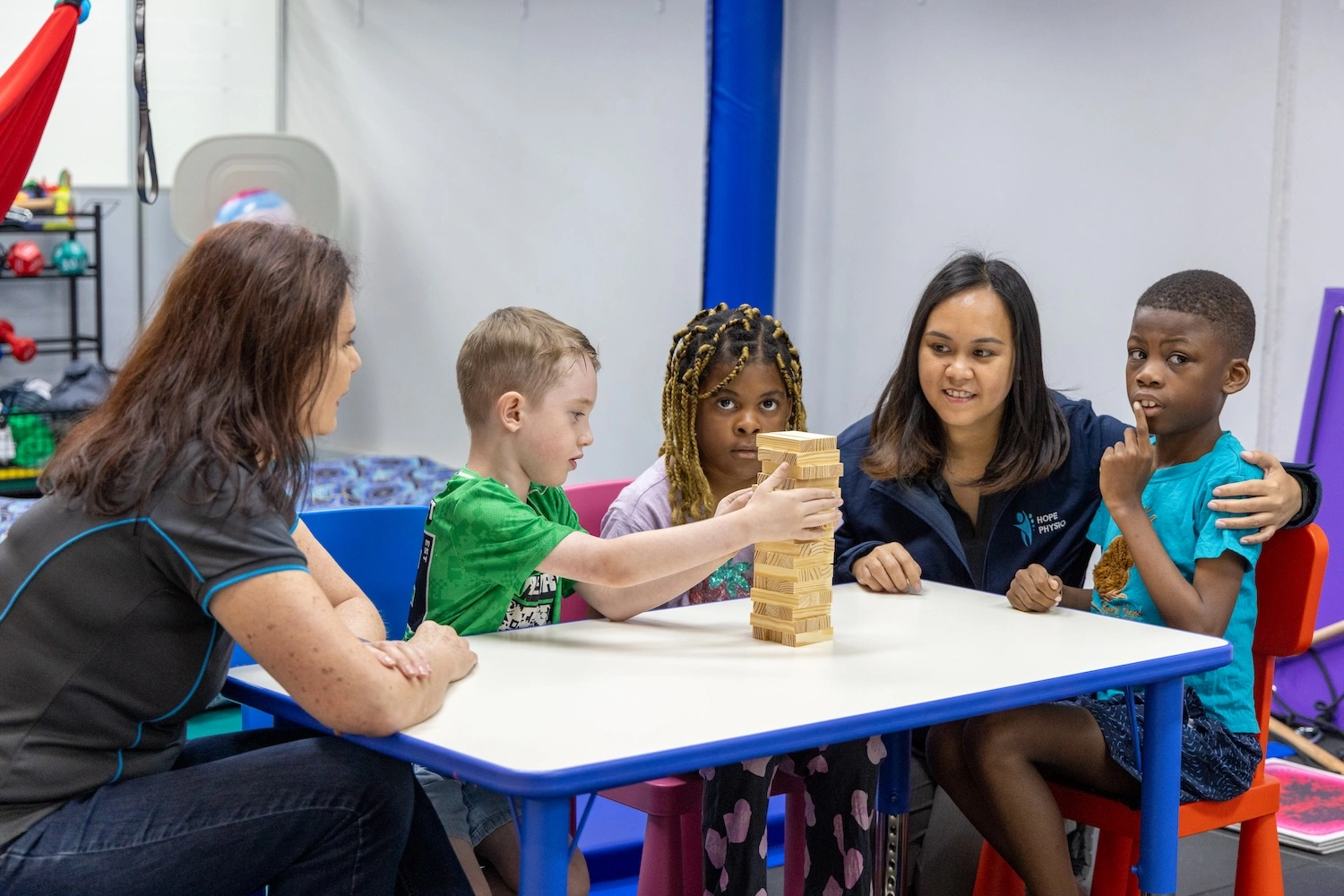
An occupational therapist can assess how your child processes sensory information and build a plan around their specific triggers, working alongside you, teachers and other professionals such as speech pathologists where needed. At Hope Physio, our occupational therapy team works with children across Melbourne and Geelong, using play-based strategies to help build the skills needed for daily transitions and routines.
Every child with autism is different, and what works for one family may need adjusting for another. What stays the same is the value of preparation, predictability and patience. Small, consistent steps, tried and adjusted over time, help build a child’s confidence to manage routines, transitions and surprises.
If transitions are a daily struggle in your home, our occupational therapy team at Hope Physio can help you build a plan suited to your child’s needs. Submit an intake form to get started.