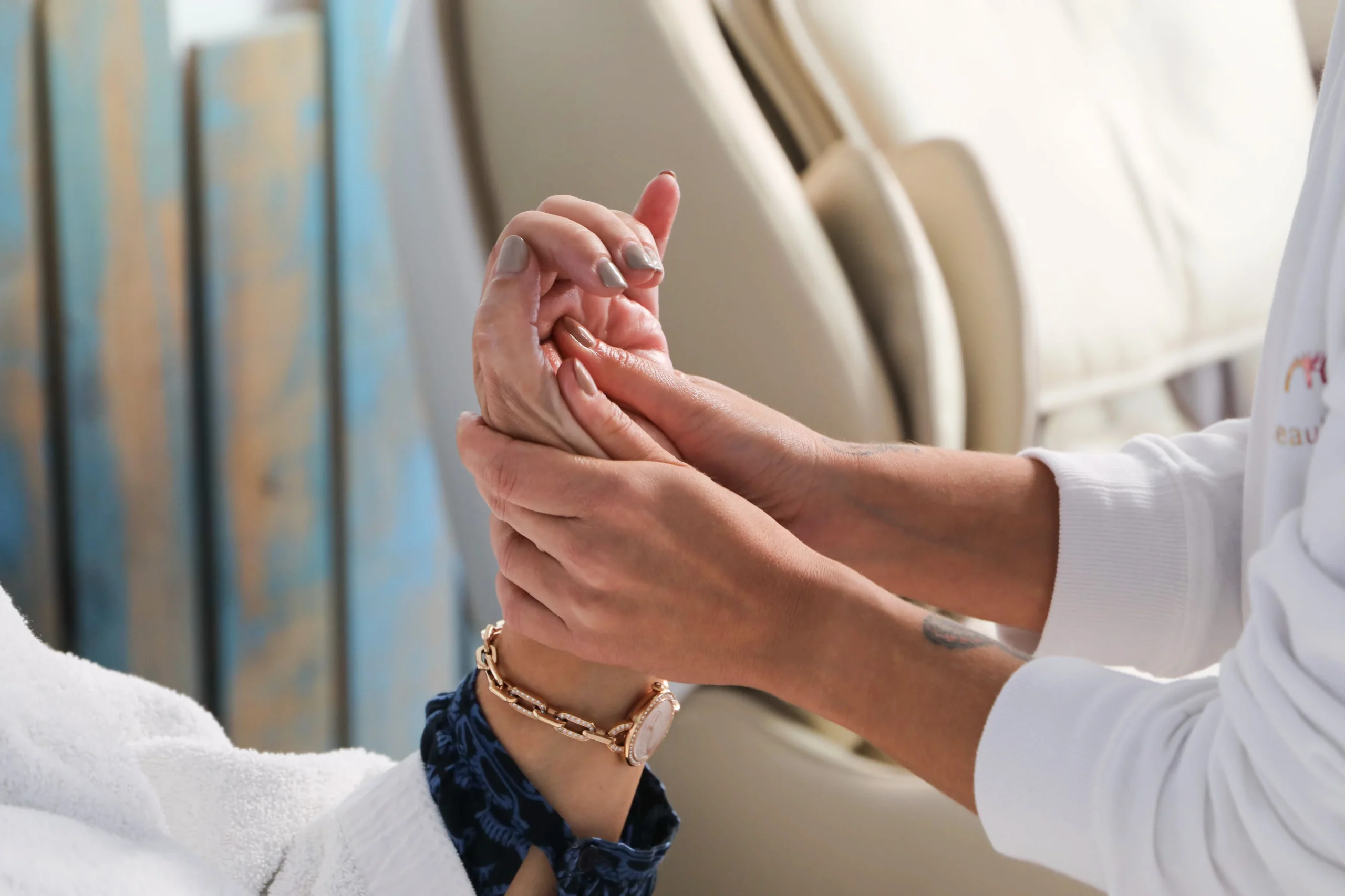
A hand or wrist injury changes your life immediately. Typing, cooking, getting dressed, or driving suddenly take real effort, and most people have no idea what recovery actually involves until they’re in the middle of it. Whether the injury happened in a fall, on the sports field, at work or on the operating table, hand therapy is usually the part of the journey that gets you back to doing things properly, not just healed on an X-ray.
This guide covers what typically happens after a fracture or tendon injury, how the two are treated differently, and what to expect from hand therapy at each stage of recovery.
What Happens After a Fracture or Tendon Injury
Hand and wrist injuries are common and come from a wide range of causes. Falls onto an outstretched hand are one of the most frequent mechanisms across all ages, from children on a playground to older adults losing their footing. Sport accounts for a large share too, particularly contact sport and ball sports where a finger or wrist takes a direct hit. At work, hand and wrist injuries are consistently among the most common workers’ compensation claims, accounting for close to a fifth of all claims lodged in some Australian states (WorkCover WA, 2022), with cuts, crush injuries and contact with tools or machinery among the leading causes (Safe Work Australia).
Once a fracture or tendon injury is confirmed, a doctor or hand therapist will typically recommend a period of protection, which usually means a splint or cast. Many hand therapists now prefer a custom-moulded splint over a plaster cast, because it can be removed for hygiene and adjusted as swelling changes while still holding the hand in a safe position.
Tendon injuries are often managed differently to fractures. Where a fracture generally needs a period of relative rest before movement begins, a repaired tendon frequently benefits from early, carefully controlled motion, started sooner and progressed more cautiously than most people expect. The exact approach depends on the injury, whether surgery was involved, and how the repair is holding up.
Flexor tendon repairs in particular often need a longer, more structured program, sometimes extending to twelve to fourteen weeks before unrestricted activity. Your hand therapist will check healing at each visit and only progress you to the next stage once the tissue is ready.
Scar Management Matters More Than Most People Expect
Once a wound has closed or a splint comes off, scar tissue can restrict movement if it isn’t managed. Hand therapists commonly use a combination of firm circular massage to encourage the scar to sit flat and flexible, silicone gel or sheeting, and sometimes a pressure garment. Starting this early, once your therapist gives the go-ahead, tends to produce a better result than waiting until the scar has fully settled.
Managing Anxiety, Discomfort or Fear of Movement
It’s common to feel some apprehension about moving an injured hand, whatever your age. Children can be frightened of a new splint or a therapist touching a sore hand. Adults sometimes brace against pain out of habit long after it’s safe to move. Older adults recovering from a fall can be anxious about re-injury. None of this is unusual, and a good hand therapist will work with it rather than push through it.
If a particular texture, sound or sensation makes the process harder, whether that’s the material of a splint, the smell of a clinic or the feeling of therapy putty, it’s worth telling your therapist. Splints can often be remade in a different material or shape, sessions can be paced differently, and small adjustments like this make a real difference to how manageable therapy feels.
Practical Tips for a Smoother Recovery
- Follow the home program consistently. Clinic visits guide progress, but the exercises done at home between appointments are what carry most of the recovery forward.
- Don’t wait for pain to disappear before starting gentle movement. Within the range your therapist sets, appropriate early movement generally supports healing better than complete rest.
- Keep the splint on as instructed. Removing or loosening it without checking first can undo the protection it’s providing.
- Ask questions when something feels wrong. Increasing pain, numbness, colour change or swelling that doesn’t settle are all worth raising with your therapist promptly.
- Plan for the practical disruptions. A dominant-hand injury affects driving, work, cooking and childcare more than people expect, so it’s worth arranging support in advance.
- Be patient with the pace. Progress in hand therapy is often gradual and non-linear, and that’s normal, not a sign something has gone wrong.
Common Mistakes to Avoid
Skipping home exercises because life gets busy is one of the most common setbacks in hand therapy. A short, consistent effort most days beats an intense session once a week.
Returning to sport, tools or heavy lifting before a therapist has cleared it is another frequent mistake, particularly once a hand feels “good enough.” Tissue can look and feel recovered well before it’s actually able to withstand full load.
Ignoring ongoing stiffness or pain and hoping it settles on its own can let treatable problems, like scar adhesions or joint stiffness, become harder to shift. Earlier intervention generally gets better results than a wait-and-see approach.
Finally, comparing your recovery to someone else’s, even for what looks like the same injury, rarely helps. Healing time depends on the specific injury, age, overall health and how consistently the home program is followed.
Frequently Asked Questions
How long does hand therapy take after a fracture or tendon injury?
Most straightforward fractures move through splinting, gentle movement and strengthening over roughly eight to twelve weeks. Tendon injuries, especially flexor tendon repairs, can take longer, sometimes twelve to fourteen weeks or more, and your hand therapist will give a more specific timeframe once they’ve assessed you.
Does hand therapy hurt?
Hand therapy is designed to work within a safe, tolerable range. Some mild discomfort during stretching or strengthening is normal as movement returns, but a good therapist adjusts the exercises rather than pushing through pain.
Do I need a referral to see a hand therapist?
This depends on the clinic and how the injury was diagnosed. Many people are referred by a GP, surgeon or hospital emergency department, though some clinics also accept direct enquiries. Check with your chosen clinic about what they need from you.
Can hand therapy exercises be done at home?
Yes, and they usually need to be. Clinic sessions guide progress and check technique, but the exercises practised at home between appointments are what carry most of the recovery forward.
When can I return to work or sport after hand therapy?
This depends heavily on the injury and the physical demands of the activity. Light desk work often resumes sooner than manual work or contact sport, and your hand therapist will guide the timing based on healing and function rather than a fixed calendar date.
Recovering from a fracture or tendon injury takes more than time in a splint. It takes the right guidance at each stage, from protection through to full strength and function. At Hope Physio, our occupational therapists provide hand therapy for people of all ages, whether the injury happened at work, on the field, at home or in surgery, with a plan built around your specific injury and daily life.
If you or a family member has recently injured a hand or wrist, submit an intake form and our occupational therapy team will be in touch to talk through the next steps.