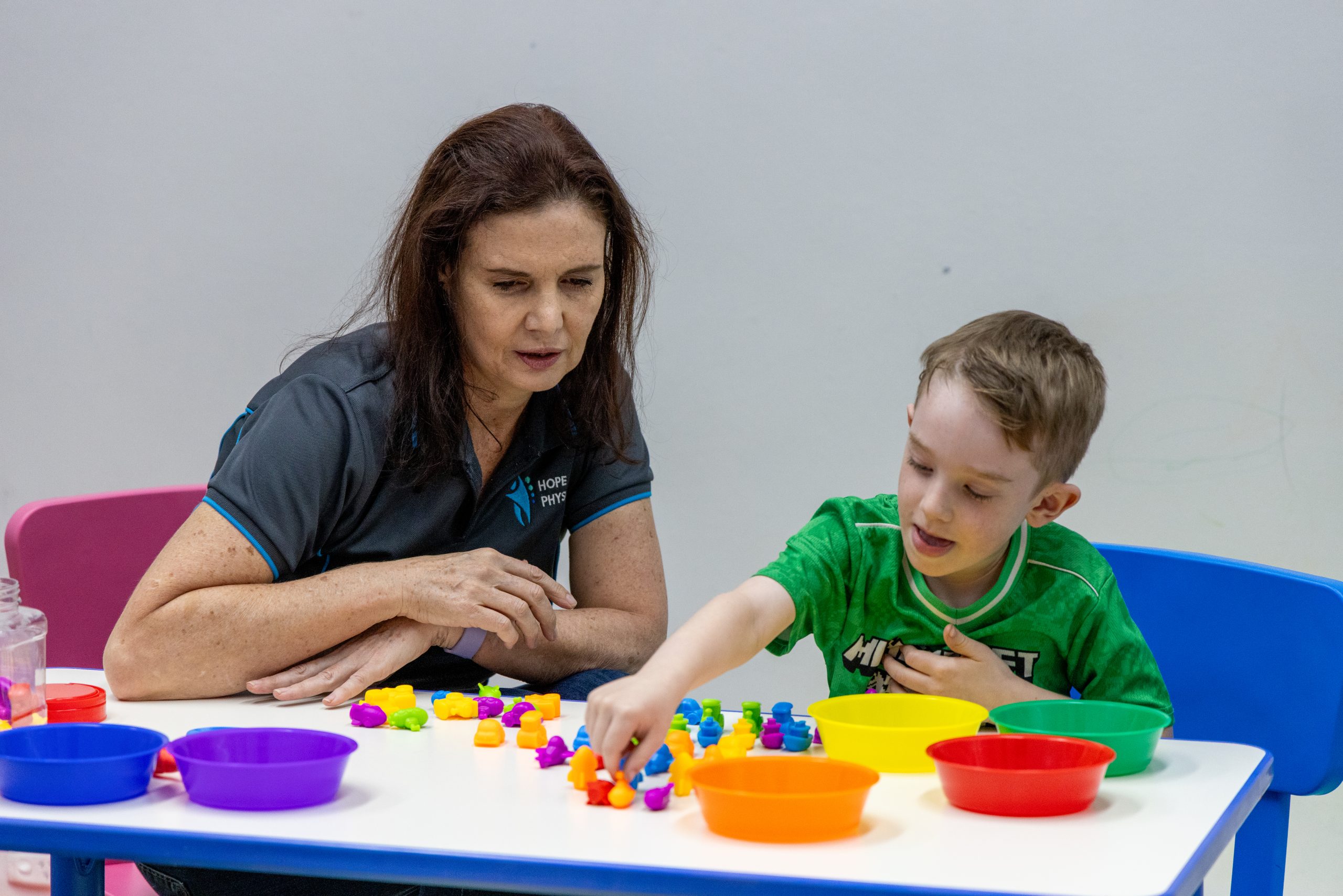
Every time your child picks up a crayon, buttons their school shirt, or uses a spoon at breakfast, they are relying on their fine motor skills. These small but essential movements of the hands, fingers, and wrists are the foundation for independence, learning, and play.
For some children, developing these skills does not come easily. When fine motor delay is present, everyday tasks that seem simple can become a source of frustration for both the child and their family. Understanding what fine motor skills are, recognising the signs of delay, and knowing when to seek help can make a real difference in your child’s confidence and progress.
What Are Fine Motor Skills?
Fine motor skills involve the coordinated use of the small muscles in the hands, fingers, and wrists. These muscles work together with the eyes and brain to complete precise movements. Children use fine motor skills for a wide range of tasks throughout their day, including holding a pencil, cutting with scissors, threading beads, tying shoelaces, and managing zippers and buttons.
These skills develop gradually from infancy. Babies begin by learning to reach for and grasp objects. Toddlers start to stack blocks and scribble. By the time children reach school age, they are expected to write letters, use classroom tools, and manage self-care tasks like dressing and eating with utensils.
When these abilities develop on track, children can participate fully in school, social activities, and family routines. When they do not, children may start to fall behind their peers or avoid tasks that require hand control.
How Fine Motor Skills Affect Handwriting
One of the most visible areas where fine motor skills come into play is handwriting. To write legibly, a child needs adequate hand strength, finger isolation, wrist stability, and hand-eye coordination. These are all components of fine motor development.
Children who struggle with handwriting skills may grip their pencil too tightly or too loosely, form letters inconsistently, write very slowly compared to classmates, have difficulty staying within lines, or tire quickly during writing tasks.
Poor handwriting is not always about practice or effort. It often signals an underlying fine motor difficulty that can be addressed through Occupational Therapy. When a child’s hand muscles are not strong enough or coordinated enough to control a pencil with ease, no amount of repetition alone will fix the issue. A structured therapeutic approach is far more effective.
Signs of Fine Motor Delay in Children
Fine motor delay looks different at different ages, but there are common indicators that parents and carers should watch for. In younger children, this may present as difficulty picking up small objects, limited interest in drawing or colouring, an awkward grasp on crayons or markers, and trouble stacking blocks or completing simple puzzles.
In school-age children, signs may include messy or inconsistent handwriting, difficulty using scissors, challenges with buttons, zippers, and shoelaces, avoidance of craft or fine motor activities, fatigue during tasks that involve hand control, and frequent switching between hands without developing a clear preference.
If you notice any of these signs, it does not necessarily mean there is a serious problem. Every child develops at their own pace. However, when fine motor challenges persist and begin to affect a child’s ability to keep up at school or manage daily routines, early support from an Occupational Therapist can help.
What Causes Fine Motor Delay?
There is no single cause of fine motor delay. It can be linked to a range of factors including developmental conditions such as Autism Spectrum Disorder, Cerebral Palsy, or Down syndrome. Sensory processing difficulties can also play a role, as children who struggle to process touch or body awareness may find it harder to control precise hand movements. Reduced muscle tone, limited exposure to fine motor activities in early childhood, and neurological differences can all contribute.
In some cases, children simply need more time and practice than their peers. In other cases, there may be an underlying condition that benefits from professional assessment and intervention.
How Occupational Therapy Supports Fine Motor Skills Development
Occupational Therapy is one of the most effective ways to support a child with fine motor delay. An Occupational Therapist begins by conducting a thorough assessment to understand the child’s current abilities, identify specific areas of difficulty, and establish clear goals.
From there, the therapist designs an individualised therapy plan that uses engaging, play-based activities to build strength, coordination, and control. Common therapeutic approaches include working with therapy putty, playdough, and resistance-based tools to strengthen hand and finger muscles. Bead threading, pegboard activities, and tweezers games improve coordination and precision. Drawing on vertical surfaces, using easels, and painting help develop wrist stability and shoulder control. Scissor skills practice, craft activities, and construction play support bilateral coordination and hand-eye integration. Handwriting-specific programs focus on pencil grasp, letter formation, and spacing.
The beauty of Occupational Therapy for children is that it feels like play. Children are engaged and motivated, which means they are more likely to practise skills consistently and build confidence over time.
The Role of Child Coordination in Everyday Independence
Fine motor skills do not operate in isolation. They work alongside gross motor skills, sensory processing, and cognitive development to support overall child coordination. A child who has strong core stability, for example, is better positioned to control their arms and hands with precision.
This is why Occupational Therapists often take a whole-child approach. Therapy may include activities that build core strength, improve posture, and develop sensory awareness alongside direct fine motor work. When all of these systems work together, children gain the coordination they need to participate in school, sport, self-care, and social activities with confidence.
Supporting Fine Motor Skills at Home
While professional therapy provides targeted support, parents and carers can reinforce fine motor skills development through everyday activities at home. Simple strategies include encouraging play with building blocks, Lego, and construction sets. Involving your child in cooking tasks like stirring, kneading dough, and pouring helps build hand strength. Practising craft activities such as cutting, gluing, and colouring develops precision. Playing with playdough, threading pasta onto string, and using tongs or tweezers during play are all effective ways to promote hand control in a fun, low-pressure environment.
The key is to keep activities enjoyable and age-appropriate. Short, regular sessions are more effective than long, infrequent ones.
How NDIS Funding Can Support Your Child’s Fine Motor Development
If your child is an NDIS participant, Occupational Therapy for fine motor skills development may be funded under the Capacity Building section of their plan, specifically under the Improved Daily Living category. This funding supports assessment, therapy sessions, and strategies to help children build the skills they need for everyday independence.
At Hope Physio, we work with self-managed, plan-managed, and agency-managed NDIS participants. Our team collaborates closely with families, support coordinators, and plan managers to ensure therapy aligns with your child’s NDIS goals.
How Hope Physio Can Help
Hope Physio provides paediatric Occupational Therapy at our Werribee clinic and through in-home sessions across Melbourne and Geelong. Our experienced Occupational Therapists work with children of all ages to assess fine motor abilities, set practical goals, and deliver therapy that supports real progress in everyday life.
Whether your child is struggling with handwriting at school, finding self-care tasks difficult, or showing signs of fine motor delay, our team is here to help. We create therapy plans that are specific to your child’s needs and designed to fit into your family’s routine.
If you are concerned about your child’s fine motor skills, get in touch with Hope Physio today to book an assessment.